
Last-mile AI deployment for Singapore SMEs: finishing the quest
By Nazreen Daud, Founder of Roquepress · Published 3 Nov 2026 · Last updated: 3 Nov 2026
In this guide:
Last-mile AI deployment is the step that takes an AI demo out of the cupboard and into daily use. It means connecting the tool to your website, forms and follow-up, testing it on real questions, and having a person ready to take over. In storybook terms: the hero has found the sword. Now someone has to carry it home.
Prologue: the demo in the misty valley
Every quest has a moment where the hero finds the treasure and then stops walking.
I've been hearing this from business owners for months. They've tried ChatGPT. Someone built a chatbot demo, or a clever prompt that drafts replies to enquiries. The demo gets its moment of glory. And then it sits there.
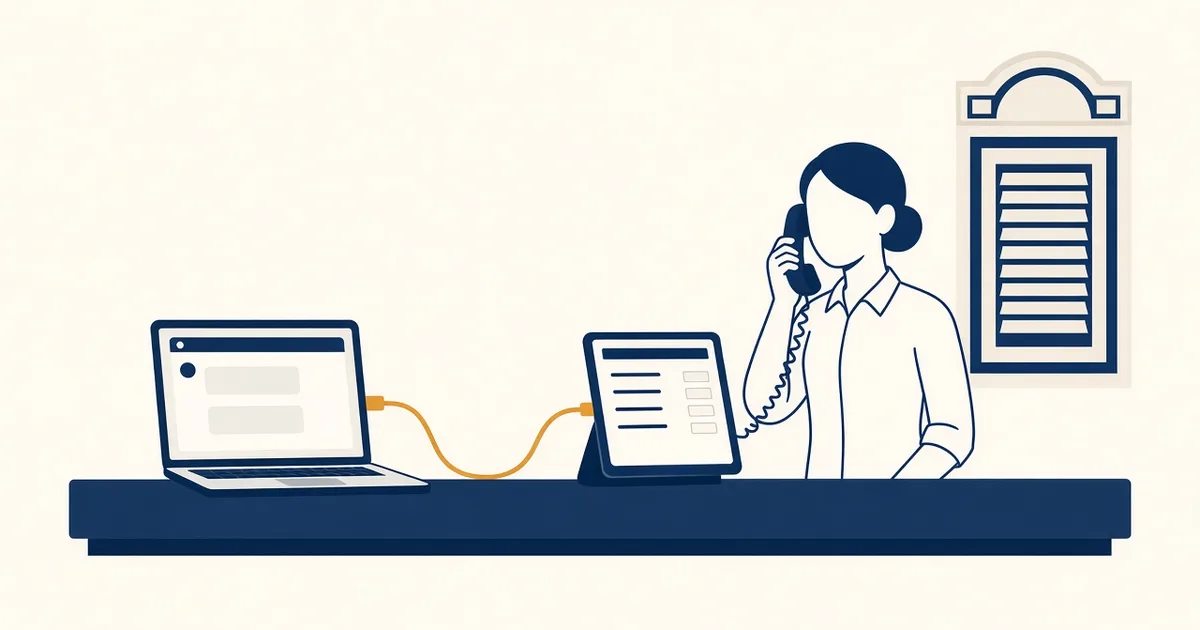
Picture it (an illustration, not a client): the demo lives in a browser tab, somewhere in a misty valley between "we should try AI" and "we use AI". Enquiries keep arriving by form and email on the other side of the mountain. Nobody has drawn the road between the two. The lantern is lit; it's just pointing at the wrong door.
That road is the last mile, and no bard will ever sing about it.
What is last-mile AI deployment, really? (The map vs the hidden door)
A demo is an old map: it proves the treasure exists. Deployment is walking the route on a Monday, when the person who drew the map is on leave.
Think of it as a hidden door: the demo shows you the room is there, and the last mile is fitting the door into your actual wall, with hinges.
For a service business, fitting that door means:
- Connection: the AI is linked to where enquiries arrive, such as your website form, booking page or inbox.
- Information: it works from your real services, policies and FAQs, not from guesses.
- Ownership: a named person in your team knows how it works and checks on it.
- Testing: it has been tried on real, messy customer questions before it goes live.
- Fallback: when it can't answer, a person picks up, and the customer knows that will happen.
The five dragons that guard the last mile
In my conversations with owners, the prototype rarely falls because the AI is bad. It falls at the joins: the plumbing around it, and the time nobody had to set it up. Here are the five dragons (observations, not survey figures):
- The dragon of the disconnected cave. The prototype lives in a separate app. Enquiries still arrive by form or email, and nobody copies them across. A fine sword, left in a cupboard.
- The dragon with no keeper. Whoever built the demo is busy now, and no one else knows how it works.
- The dragon of the untested bridge. It handled the five questions the owner thought of. It hasn't met the customer who writes three paragraphs in mixed English and Malay at 11pm.
- The dragon of "what if it's wrong?" There's no plan for mistakes. Owners worry it will say something off-brand, so they switch it off.
- The dragon nobody asked about. The data question was skipped: what customer information the tool sees, where it goes, and who's responsible for it.
How do I use AI in a small business in Singapore without waking the data dragon?
Know what personal data the tool touches and on what basis you use it. It's the least exciting part of the map, and the one you most need.
The PDPC's Advisory Guidelines on Use of Personal Data in AI Recommendation and Decision Systems (published 1 March 2024) state: "Generally, organisations can use personal data where there is meaningful consent." They also say that third-party developers of bespoke AI systems are "data intermediaries who have obligations under the PDPA" (PDPC, 1 Mar 2024).
In plain terms: if someone sets up AI for you, they have data responsibilities, and so do you. Before launch, write down what the tool can see, why, and who's accountable. This is general information, not legal advice.
Is my business ready for last-mile AI deployment? Answer the gate's riddles
At the end of the valley, an old stone gate asks riddles. If you can answer each in a sentence, you're ready. If you can't yet, congratulations: you've found your to-do list.
- The job: what one task should AI do first? (For example, acknowledging new website enquiries.)
- The source: where does that work start today: which form, inbox or channel?
- The knowledge: where are your up-to-date services, policies and answers written down?
- The owner: who in your team will check on it every week?
- The handover: who picks up when the AI can't answer, and how fast can they realistically respond?
- The trial: before it talks to customers, will you run it alongside your current way for a while, with a person approving each reply?
- The data: what personal data will it see, and have you checked your consent and privacy notice?
- The measure: what will you look at after a month to decide whether to keep it?
- The keys: who holds the logins, and are they in the business's name?
Stuck on a riddle? Roquepress can scope it with you.
Small quests first: good first uses of AI for service businesses in Singapore
Nobody's first quest is the biggest dragon. Pick one narrow, repetitive task at the start of your customer journey. These are options, not promised results:
- Acknowledging new enquiries with a clear, on-brand message that says what happens next.
- Answering common questions from your own written FAQs, such as opening hours, service areas or what to prepare.
- Sorting incoming leads by service type so the right person sees them.
- Drafting replies for a person to check and send.
Should I set up AI myself or hire a guide?
It depends on your time, your team and how much the task matters if it goes wrong.
| Set it up yourself | Get it set up for you | |
|---|---|---|
| Suits | Owners with time and a technical team member | Owners who are short on time or in-house tech skills |
| You handle | Choosing tools, connecting, testing, upkeep | Decisions, approvals, the content only you know |
| Watch out for | The project stalling when you get busy | Lock-in: insist on logins and notes in your name |
Who this isn't for
Not every business should set out on this quest yet.
- You don't have a steady enquiry flow yet. Fix the website and how people find you first. There's nothing for AI to follow up.
- No one can own it. If nobody will check on it weekly, it will drift. Wait until someone can.
- Your process isn't written down. AI can't read a map that only exists in your head.
- You want it to replace your team. AI can take on first steps. People still need to handle the unusual cases and anything that needs a judgement call.
My view: there is no magic, only a good map
This section is my opinion.
I'll be the spoilsport: the last mile isn't mostly a technology problem. The tools are good enough for the tasks above. What stalls is deciding who owns it, writing down what the business knows, testing it on real customers and agreeing who steps in. Those are management decisions, and no tool makes them for you.
So treat AI deployment the way you'd treat hiring someone part-time. Give it one clear job, the right information, a manager, and a review after the first month. You wouldn't let a new staff member talk to customers without a briefing. Don't let a tool do it either.
How Roquepress walks the last mile with you
Think of us as the guild that helps you carry the sword home. We take an AI idea you already have and set it up inside your existing website, forms and follow-up. The work is scoped before we start, built and tested with you, then handed back with the logins and notes you need to keep running it.
You keep the keys. If you'd like to talk through your own prototype, get in touch, or see our services first.
Related: buying software vs custom development and how we build websites with AI, and where people still decide.
FAQ
What is last-mile AI deployment?
Last-mile AI deployment is the work of moving an AI tool from a demo into daily use. It covers connecting it to where enquiries arrive, giving it your real business information, testing it on real questions, naming an owner, and setting up a handover to a person when it can't help.
Is my SME ready to deploy AI?
You're likely ready if you can name one task for AI to do, where that work starts today, who will own it, who takes over when it's stuck, and what personal data it will see. If any of those are unclear, sort them out first. That's usually the faster route to a tool you'll keep.
Do I need in-house tech staff to use AI in my business?
Not necessarily. You do need someone who owns the tool and checks on it, even if they aren't technical. The setup itself can be done by an outside provider, as long as the logins, settings and notes are handed back to your business so you're not dependent on them.
How long does it take to move an AI prototype into daily use?
It depends on the scope: how many places the tool connects to, how ready your business information is, and how quickly decisions and approvals happen. A narrow first task is quicker to deploy than a broad one, which is one reason to start with a single job and add more later.
Will AI replace my customer service staff?
It's designed to take on first steps, such as acknowledging an enquiry or answering a common question, and then hand over. Your staff still handle the judgement calls and the relationships. A good setup makes the handover clear to both the customer and your team, rather than hiding the person behind the tool.
Who owns the AI setup and data after it's built?
Your business should. Ask for the accounts and logins in your company's name, plus notes on how it's configured. Under the PDPC's guidance, a third-party developer of a bespoke AI system acts as a data intermediary with its own obligations, and you remain responsible for how your customers' data is used.
About the author: Nazreen Daud is the Founder of Roquepress, a Singapore web and digital services company that builds websites and connected systems for service businesses. Read Nazreen's bio