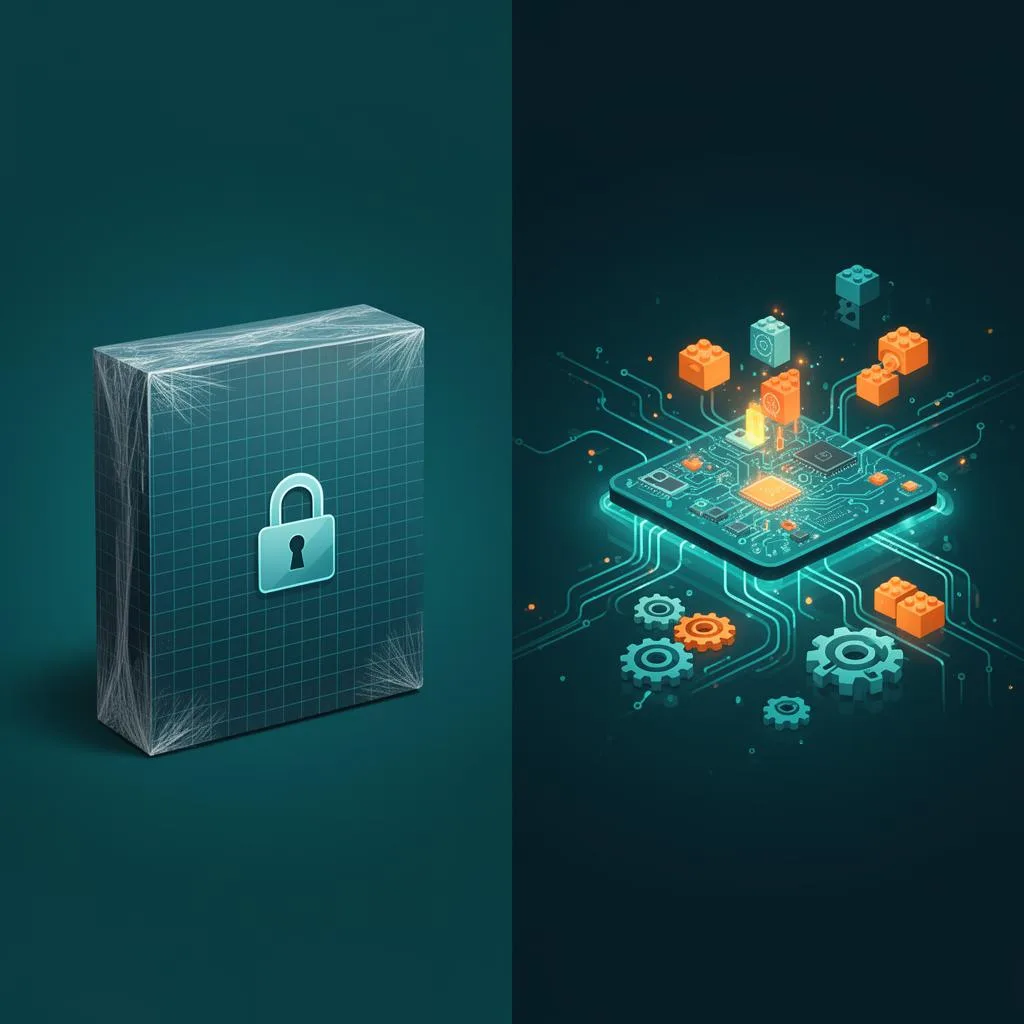
Buying Software vs Custom Software Development: How Businesses Should Really Decide
Your operations cannot scale with spreadsheets and disconnected tools. Someone suggests buying a ready-made platform. Someone else says custom development makes more sense. The real answer depends on where your business is heading — not just where it is today.
The Decision That Shapes Your Business for Years
I have sat in dozens of these meetings. The founder or operations manager finally admits that the current setup is not working. Orders fall through cracks. Customer data lives in five different spreadsheets. Staff spend hours on manual tasks that software should handle in seconds.
Then comes the fork in the road. Buy something off the shelf, or build something from scratch?
Both paths solve problems. But they follow very different philosophies. Buying software focuses on convenience. Custom development focuses on alignment with how your business actually works. Understanding this distinction is essential before you spend a single dollar.
At Roquepress, we have helped businesses make this decision many times. Some clients needed a subscription tool. Others needed a system built specifically for their operations. The wrong choice costs money, time, and momentum. The right choice compounds value over years.
What Buying Ready-Made Software Really Means

Ready-made software is built for a specific group of businesses. The company develops a product that solves common problems across an industry, then sells it as a subscription or licence. Think Salesforce for CRM, Shopify for e-commerce, QuickBooks for accounting, or SAP for enterprise resource planning.
These platforms work because they standardise common business activities. A retail store can start selling online within days using Shopify. A small company can manage its finances through QuickBooks without building financial tools internally.
The benefit is speed. Features are available immediately. Implementation takes days or weeks instead of months. The initial cost is lower because you pay monthly instead of funding a full development project.
Advantages of Off-the-Shelf Software
- Faster implementation. Most platforms go live in days or weeks. You address pressing operational issues quickly.
- Lower initial investment. Monthly subscriptions mean you do not fund a full development project upfront.
- Vendor-managed upgrades. The software company rolls out updates, security patches, and new features. You benefit without managing the development effort.
- Established reliability. Mature platforms serve thousands of businesses. Their systems are tested across many environments.
The Limitations You Should Know
Here is the part that subscription software vendors do not emphasise in their marketing.
- Limited customisation. Most platforms are configurable, not customisable. You adapt your operations to the software framework — not the other way around.
- Integration challenges. Businesses do not use just one tool. Connecting multiple SaaS products creates data silos, technical dependencies, and sync issues.
- Cumulative subscription costs. S$200 per month sounds reasonable. But five tools at S$200 each, over three years, totals S$36,000 — with nothing to show if you cancel.
- Feature overload. You pay for features you never use. These features add interface clutter without providing value.
- Vendor dependency. The vendor controls pricing, product direction, and feature availability. They can raise prices, deprecate features, or shut down entirely.
- Data portability risks. Some SaaS applications make it difficult to export your data. This creates vendor lock-in.
- Workflow rigidity. You can configure settings, but the core workflow logic is difficult or impossible to modify.
What Custom Software Development Actually Involves
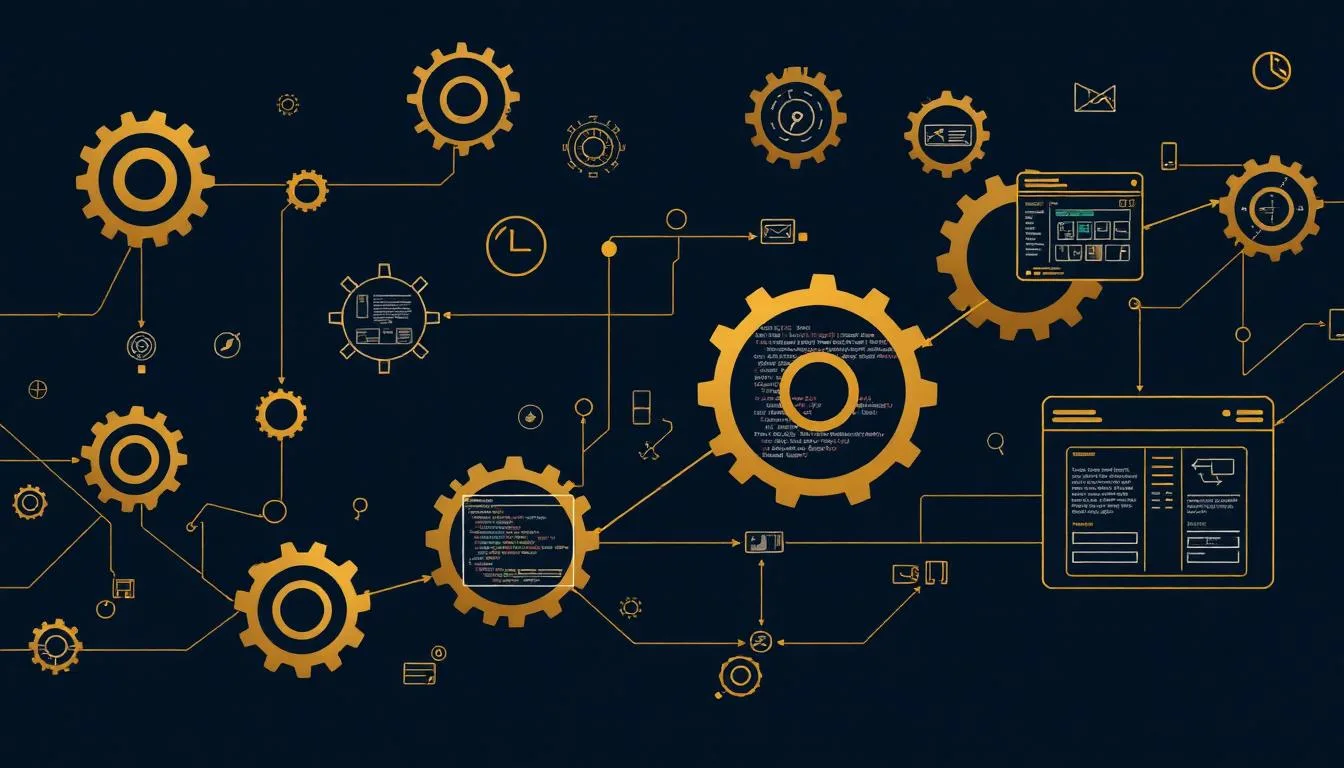
Custom software development is the process of building software that meets the precise needs of your business. Unlike ready-made platforms, these systems are not created for mass distribution. They are developed for one organisation or a defined group of users.
At Roquepress, our software development process follows six stages: Discovery, Architecture, Development, Testing, Deployment, and Improvement. Each stage is centred around understanding the business and translating it into a functional system.
A logistics business may need route optimisation and fleet management. A healthcare provider may need clinical data integrated with patient management. A food business may need capacity management and timed ordering. No generic software handles these specific needs well.
Instead of expecting teams to conform to the software, the software conforms to the way the organisation works.
Benefits of Building Custom
- Built around your operations. The software mirrors how your team actually works. No workarounds needed.
- Full ownership and control. You own the code, the data, and the roadmap. No vendor can change your pricing or remove features.
- Greater flexibility. Every element can be adjusted. Need a new feature? Add it. Need to change a workflow? Update it.
- Seamless integration. Custom software connects with your existing tools. Data flows consistently without manual intervention.
- Scalability for future growth. The system grows with your business. You do not need to migrate to a new platform when requirements change.
- Competitive advantage. Your technology becomes a differentiator. Competitors cannot replicate processes that are built into your own system.
- Potential to resell. A well-built custom system can be turned into a SaaS product. Your operational tool becomes a revenue stream.
The Trade-Offs to Consider
I am transparent about this with every client. Custom development is not a shortcut.
- Higher initial investment. Design, development, and testing require upfront capital. At Roquepress, our MVP builds start from S$5,000.
- Longer implementation time. A custom system takes weeks to months to design, build, and deploy. You need patience for a structured development process.
- Ongoing maintenance. After deployment, the system needs monitoring, updates, and security patches.
- Choosing the right development partner. The success of the system depends heavily on the skill of the team building it. Poor design choices create problems that compound over time.
- Scope management. Without proper planning, projects can expand beyond the intended scope. Clear requirements and a defined roadmap are essential.
The Real Cost Comparison Over Time

This is where the decision becomes clearer. Most business owners compare the monthly subscription cost to the custom development quote and conclude that buying is cheaper. That comparison is incomplete.
Let me give you a practical scenario. A service business in Singapore uses three subscription tools: a CRM at S$150 per month, a booking system at S$80 per month, and an invoicing tool at S$70 per month. Total monthly cost: S$300. Over three years, that is S$10,800. Over five years, S$18,000.
Now consider a custom system that combines CRM, booking, and invoicing into one platform. The initial build costs S$8,000. Annual maintenance costs S$1,200. Over three years, the total is S$11,600. Over five years, S$14,000.
The custom system becomes cheaper by year three. By year five, you save S$4,000 — and you own the system outright. You can modify it, scale it, or even license it to other businesses.
The subscription tools? Cancel them, and you lose everything. Every dollar you paid was rent, not equity.
| Factor | Subscription Software | Custom Development |
|---|---|---|
| Upfront Cost | Low (monthly fees) | Higher (one-time build) |
| 3-Year Total Cost | S$10,800+ | ~S$11,600 |
| 5-Year Total Cost | S$18,000+ | ~S$14,000 |
| Ownership | None (rental model) | Full ownership |
| Customisation | Limited | Unlimited |
| Resale Potential | None | Can become SaaS product |
| Vendor Dependency | High | None |
When to Buy and When to Build
Not every business needs custom software. And not every business should rely on subscriptions forever. The right choice depends on your stage, your operations, and your growth plans.
Buy When:
- Your needs are standard and well-served by existing platforms.
- You are in the early stages and need to validate your business model quickly.
- Budget is tight and you cannot fund a development project.
- The problem is generic — accounting, email marketing, basic CRM.
- You need a solution this week, not this quarter.
Build When:
- Your operational workflows are unique and no existing tool fits properly.
- You are outgrowing your current tools and hitting limitations regularly.
- Integration between multiple tools is creating data gaps and manual work.
- You want full ownership and control over your technology.
- You see an opportunity to turn your system into a product for others.
- Your industry has specific compliance or security requirements.
- You are planning for growth and need a system that scales with you.
Real Business Use Cases from Our Work
Let me share three examples from businesses we have worked with at Roquepress. These are not hypothetical. These are real systems we built for real operations.
A Booking System That Replaced Manual Scheduling
A Quranic institute needed to manage one-on-one recitation sessions during Ramadan. Before the custom system, the admin team handled bookings through WhatsApp messages and spreadsheets. Double bookings happened regularly. Teachers and students wasted time on logistics instead of learning.
We built a customised booking calendar that matched teachers with students, managed time slots, and sent automated confirmations. The result: zero double bookings, 70% less admin time, and a better experience for everyone involved.
No subscription booking tool could have handled this. The scheduling rules were specific to the institute. The teacher-student matching logic was unique. The system needed to reflect their operations, not force them into a generic template.
An Ordering System with Automated Certificate Generation
A Qurban service provider processed hundreds of orders each season. Every order required a certificate to be designed, personalised, and sent to the customer. The team was designing each certificate manually in Canva. It took hours of work that grew more painful each year.
We built an automated ordering system that accepted payments, tracked orders, and generated personalised certificates instantly. What used to take an entire weekend of manual design work now happens in seconds.
The system gave the business reliability. Customers received their certificates immediately. The team focused on operations instead of design tasks. And the system can scale to handle ten times the order volume without additional staff.
A Capacity Management System for a Home Food Business
A home-based food business was receiving hundreds of orders monthly. Without a system, the owner had no way to regulate capacity. Orders exceeded what the kitchen could handle. Collection times clashed. Customers waited. Quality suffered.
We created a capacity management and timed ordering system. It automatically regulates how many orders are accepted per time slot. When a slot is full, it closes. Customers pick from available collection windows. The business delivers consistently without overpromising.
This is the kind of system that no subscription platform provides. The logic is specific to this business. The capacity rules, the time slot calculations, the order limits — all of it was built around how this particular kitchen operates.
Common Mistakes Businesses Make When Choosing Software
After years of consulting on this decision, I see the same patterns repeatedly.
Mistake 1: Choosing based on price alone. The cheapest option is rarely the most cost-effective over time. A S$50 per month tool that does not fit your workflow wastes more money than a S$8,000 system that eliminates hours of manual work every week.
Mistake 2: Assuming subscription tools will always be enough. Businesses grow. Processes become more specific. What works at ten orders per day breaks at one hundred. If you plan to scale, plan for the system that scales with you.
Mistake 3: Building custom too early. If you are still figuring out your business model, a custom system can lock you into workflows that change next month. Start with subscription tools to validate, then build custom once your processes are stable.
Mistake 4: Not auditing existing tools before deciding. Many businesses have three or four subscription tools that overlap in functionality. Before buying another tool or building custom, audit what you already pay for. You might be surprised by how much waste exists.
Mistake 5: Ignoring the resale potential of custom systems. I have seen businesses build internal tools that solve problems for their entire industry. A booking system built for one clinic can become a product sold to fifty clinics. That transforms a cost centre into a revenue stream.
The Long-Term Growth Perspective
The businesses that grow sustainably are the ones that treat technology as infrastructure, not as a quick fix. Subscription tools are excellent starting points. But as operations mature, the limitations of generic software become constraints on growth.
Custom software is not just a tool. It is an asset. You build it once, improve it continuously, and it compounds value over time. It reduces manual effort. It eliminates errors. It gives your team the structure to handle more work without burning out.
And here is the part most people miss: custom software gives you data. When you own the system, you own the data. You can analyse patterns, identify bottlenecks, and make decisions based on information that subscription tools either do not provide or charge extra for.
The businesses I work with that have invested in custom systems consistently report the same outcomes. Less time on manual tasks. Fewer errors. Better customer experience. And a sense of control over their operations that no subscription tool can replicate.
Let Us Help You Make the Right Decision
Whether you need a subscription tool or a custom-built system, the first step is understanding your operations clearly. At Roquepress, we do not push one approach over the other. We assess your workflows, identify inefficiencies, and recommend the path that gives you the most value.
If your business has outgrown its current tools, or if you are spending more time working around your software than working with it, let us talk. Book a consultation, and we will map out what a custom system could look like for your operations — honestly and without pressure.

Founder of Roquepress with over a decade of hands-on experience in web development, SEO, paid advertising, and digital strategy across Singapore and Southeast Asia. He writes from direct experience — no theory, no fluff.